Making music.
Together.
In person.

Singing and playing alongside other people is one of the oldest human needs. Consider this your invitation back in.

Why Carnival of the Commons exists

Create? Or consume?

You said “consume”, right? That's the honest answer, and there's no shame in it – easy is easy for a reason. But “easy” was built by someone. Every track you let wash over you, every endless feed, somebody made that. And the way we've arranged things now, they were paid almost nothing to.

Carnival of the Commons exists to change this. For the musicians, and for all the people with musical spirit. That is everyone.

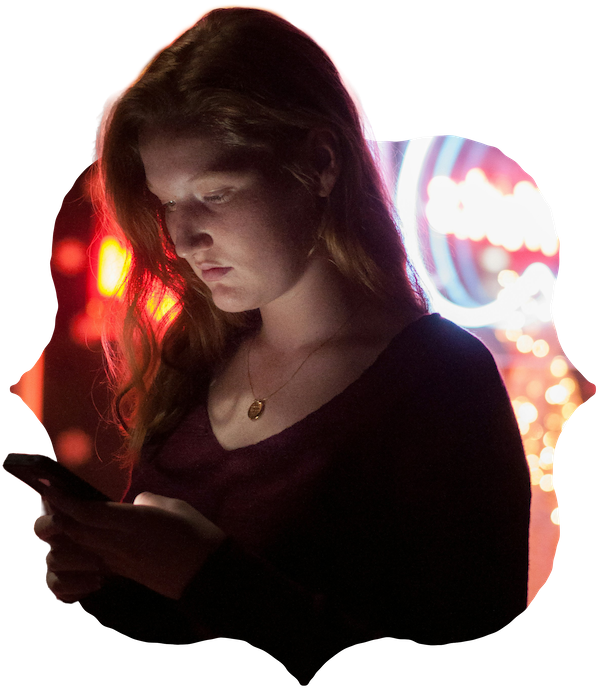
A young woman alone on her phone, lit by blurred coloured lights

One

We mistook connection for company

Screens give us a thousand reasons to stay in and none to be in the same place. They keep us in touch and out of reach. Since 2020, more than half a million more people across the UK have crossed into chronic loneliness. Intergenerational connection is fading, and we're being driven to do more on our own, online. The tools are clever, but a clever tool doesn't do what a roomful of people making music does.

The same bias reaches into the music itself. Streaming platforms are built to pay a single name more easily than a band – splitting one payout across a group is friction they would rather skip – so the economics quietly favour the solo artist over the ensemble. Less music gets made together, and less of what is made together gets heard. The loneliness feeds itself.

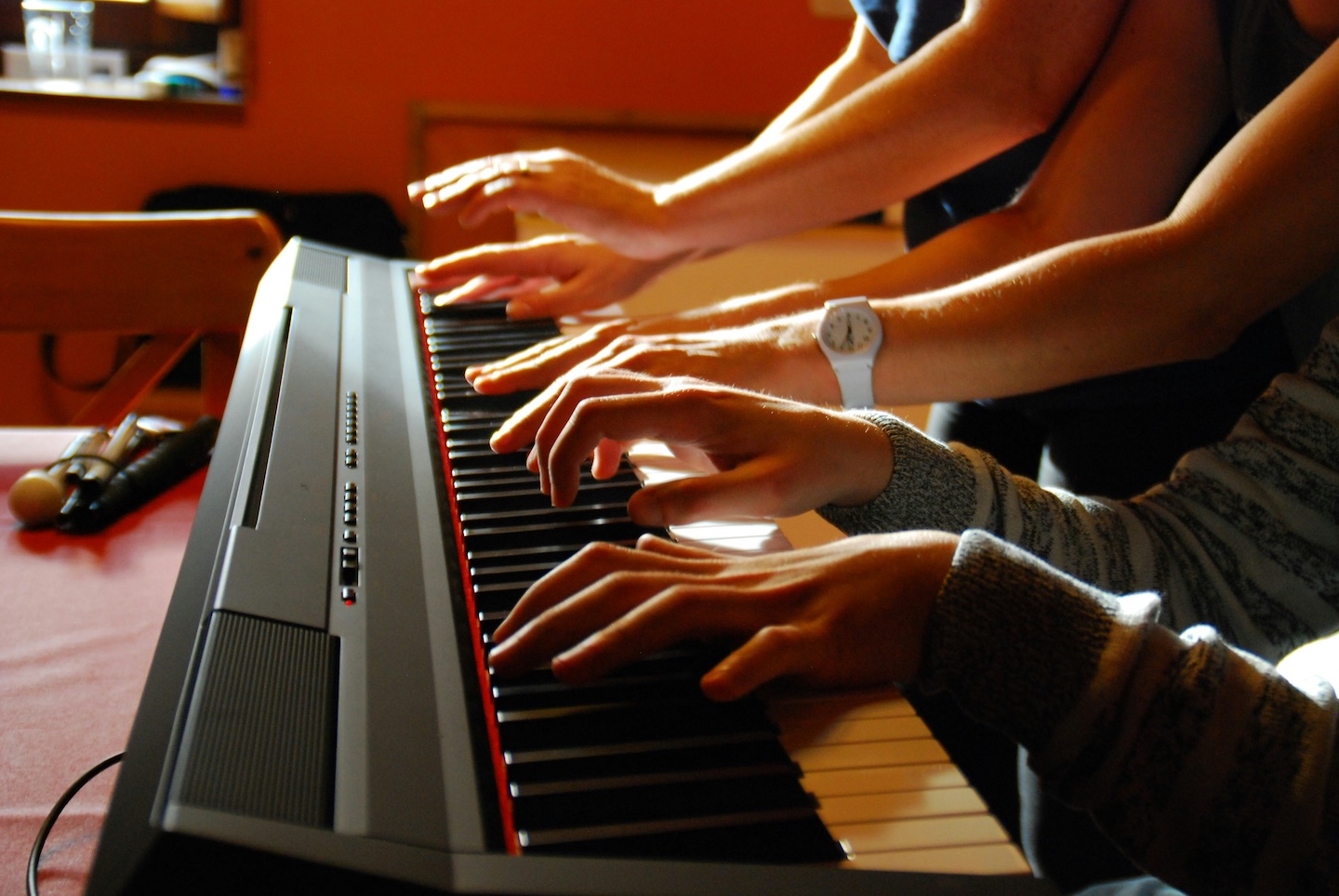
Singing with other people, making something in a room – that's not a worse version of the digital thing. It's the thing the digital version was always a thin copy of. Carnival is mixed ages, phones away, in a room where the music only exists because the people in the room are actively listening to each other and working together.

You can't consume your way into that. You have to make it, together, or it doesn't happen.

A bottle of red pills labelled ‘Ok’ – the cure, sold in pill form

Two

The cure got privatised

The case for music is no longer soft. Making music together lifts dopamine, settles cortisol, can pull a room's heart rates into time with each other – and the research is firm that the active ingredient is taking part, not listening from the side.

The long-range evidence has caught up with the feeling. A major study* has shown that people who keep the arts in their lives are linked to a 31% lower risk of dying over the years. Older adults who regularly play and listen to music are linked to roughly a third lower risk of dementia. The National Academy for Social Prescribing and others are pushing for exactly this to be prescribed for anxiety, depression, and dementia.

But notice how it reaches you now: a subscription, a supplement, a prescription – something to buy or be given, alone. The thing that actually works is the one thing you can't do by yourself.

It isn't a luxury. It's infrastructure we forgot to fund.

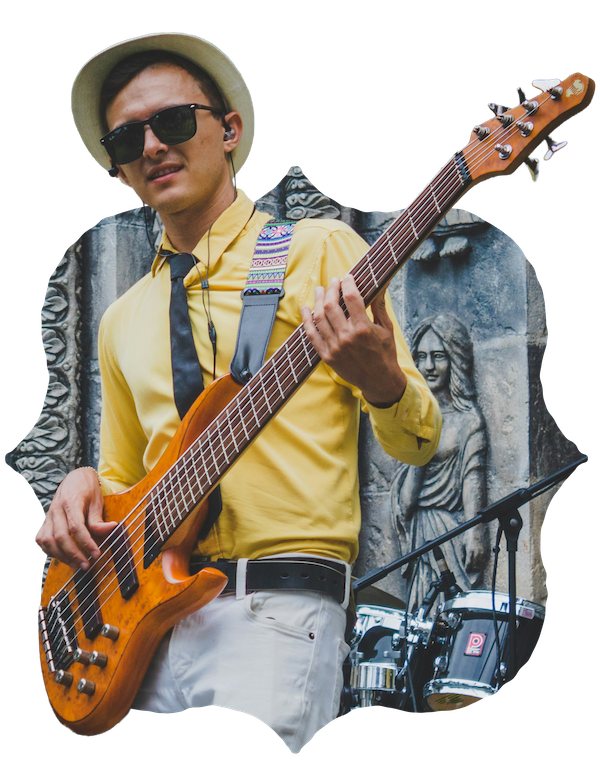
A bass guitarist mid-performance

Three

The musician can't live on it

Making a living from live music has never been harder. The biggest names fill stadiums. The maths simply doesn't work for the majority of musicians. Audiences are going out less, taking fewer chances on someone unheard, and the streaming pennies don't close the gap. We lose musicians not because the talent dried up, but because their talent isn't paying the bills.

Carnival of the Commons does it the older way: local musicians, properly paid, with people who turned up on purpose. We are a charity committed to ensuring that the surplus doesn't leak off to a platform, but flows back to the artist.

Patronage, not extraction.

Another way

We built the room back.

Amor Musicae is the only UK charity dedicated to reminding musicians and music-lovers how joyous musical creation can be. Carnival of the Commons is its first and founding project.

A Charitable Incorporated Organisation (CIO), with a wholly owned trading subsidiary, Carnival of the Commons Ltd. Its Trustees are established professionals committed to strong governance and long-term growth.

Charity registration: application in progress

Unplugged.
Uninhibited.

Looking around the room, no one wants to go first, even though we are all dying to make some noise.

We all know why. It's been ages since we've been in this position. And back then we didn't spend our time wondering if we were any good.

We just joined in.

Carnival of the Commons is all about imperfection. Having a go. Laughing at ourselves. Letting something rise up inside us.

It feels unnatural at first, but…right. It's a feeling older than… oh, I don't know… vinyl.

Older than playlists. Older than music lessons and auditions and being told who's talented and who isn't.

It's the feeling of adding your voice to something bigger than yourself. The Common Crowd.

No audience.
No experts.
No gold stars.

Just a room full of people finding the courage to make a sound and discovering they're not doing it alone.

If this sounds like your kind of trouble, there's a place for you in it.

Join the Common Crowd

Your Ringmaster
and the Katalyst

Benedict, the Ringmaster

The Ringmaster

Benedict

Benedict was born to create – writing poems, songs and plays before he was a teenager, then stage school, a drama degree, and years as a session musician in London. Top of the Pops appearances, gigs running from zydeco to acid house to heavy rock.

A family later pulled him into a different discipline: directing major change programmes across Oxford and beyond. Carnival of the Commons is where those two lives meet – the rigour that ships complex work, now pointed at joy. A public ritual where people make the show rather than watch it.

Katnip, the Katalyst

The Katalyst

Katnip

Katnip has been singing her whole life – first on stage as a child, then in bands at university, and ever since in the smaller registers ordinary life allows: an Oxford band, the odd Ave Maria or jazz standard at a wedding. She kept the ember going.

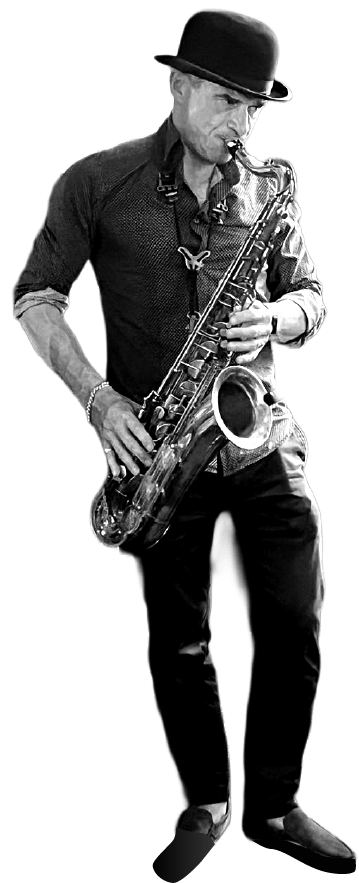
She met Benedict at an Oxford open mic – she walked into a pub looking for someone to accompany her, and a man in a bowler hat at the bar offered. In personal terms, the rest is history. In creative terms, it was the spark the Carnival needed.

Held in trust

The Trustees are established professionals in their fields, focused on strong governance and the long-term future of the charity. Select a trustee to read their story.

Pre-launch preview · Un-Usual